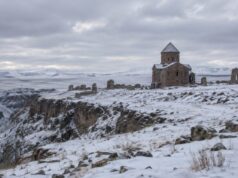
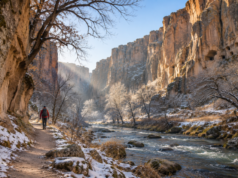
For a first visit to Hattusa and Yazılıkaya, reserve one day around Boğazkale and secure a way to travel between the two archaeological sites. Start at Hattusa’s Great Temple, continue to the Upper City gates, and finish at the rock sanctuary of Yazılıkaya if the opening hours leave enough time. If you arrive late, decide which site matters most before you enter. The last leg to Boğazkale and the space between the stops matter more than the distance from your hotel on a map.
Use Boğazkale as the anchor
Hattusa was the Hittite capital. The ruins occupy a landscape of slopes, ridges and rock outcrops above the Budaközü valley. Yazılıkaya, a rock sanctuary with carved reliefs, belongs to the same UNESCO World Heritage property and has its own approach. Save the entrances separately and confirm which gates are in use. The municipality publishes an indicative visit of two and a half to three and a half hours for its suggested route. Treat that as a planning reference for the site circuit, with additional time for the journey to Boğazkale, ticketing, breaks and any museum visit.
For an independent trip, start with the town-to-site leg. A regional ticket to Çorum or Sungurlu can get you closer, but you still need to reach Boğazkale and get back. Check the operating days and last service with the carrier, then confirm the onward leg before buying the ticket. If you book a driver, name both Hattusa and Yazılıkaya, agree on waiting time and set a pickup point for each. On an organised trip, ask how much time is allocated at each site and whether the museum is part of the route.
First stop: the Great Temple and Lower City
Start low in the city to get a sense of the settlement before heading up to the walls. At the Great Temple, pay attention to the footprint of the building and the rooms surrounding it. This is a place to read the ground plan and notice the scale of the stone foundations. Allow time for the interpretive signs. Looking at the terrain from this part of the site also makes it easier to understand why Hattusa’s later stops feel spread out.
If you are short on time, choose the temple and one gate as your main Hattusa stops. That gives you a contrast between a public religious complex and the city’s defences. If you want to see Büyükkale as well, check its access and work it into the route while you still have daylight. Do not assume that every stop on an old site map is open or can be reached by the same vehicle route.
Second stop: the gates and Upper City
Use the Lion Gate as the anchor of the upper circuit. The guardian figures make it easy to recognise, but also look beyond the carving at the opening and the line of the wall. If the authorised route includes Yerkapı and the Sphinx Gate, compare the view from that higher part of the defences with the Lower City. The exposed slopes can feel very different from the sheltered areas around the temple.
Walking the full circuit, moving between stops in an authorised vehicle and joining a guided route are different visits. Ask staff at the entrance what is permitted that day, how far you can proceed and where you can turn back. Keep water and layers with you, and put the most important outdoor stop early if heat, rain or short daylight could shorten the visit.
Third stop: Yazılıkaya
Allow a separate arrival at Yazılıkaya. Its carved processions are read in the context of the natural rock chambers. Slow down and look at how the figures are arranged before trying to identify each one. Use the site interpretation to distinguish what the reliefs show from the interpretations of their function. Check which chambers are accessible and follow local instructions around the carvings.
If the sanctuary closes early on your date, reverse the order. An early visit there followed by a shorter Hattusa circuit can preserve both experiences. If you have only enough time for one, choose Hattusa for a sense of the capital’s scale and Yazılıkaya for a concentrated look at Hittite religious imagery.
When an overnight makes sense
A night in or near Boğazkale is most useful when it gives you an early start, removes a fragile connection or lets you add the local museum without rushing the outdoor stops. Confirm accommodation, meals and pickup arrangements for the season. If your journey already includes Ankara, our Gordion day trip guide covers a separate Phrygian visit that deserves its own time.
Before departure, check admission, opening hours, the return transport and the weather on your actual date. Keep the two site entrances and your driver’s pickup location available offline.
Use the museum to connect objects with places
Boğazkale Museum is a separate stop in the district centre. Confirm its opening hours and admission before adding it. If you reach town before the outdoor sites open, use the wait to review the map and identify the locations you want to see. If the museum and site schedules overlap awkwardly, put the exposed outdoor circuit first on a day with a short weather window.
After visiting the temple and gates, a museum stop can help you make sense of the objects that once belonged to those buildings. Keep the distinction between a find from Hattusa and something you can still see in place. This is especially useful when planning a visit with children or anyone who wants a short introduction before tackling the larger landscape.
Sources checked 10 November 2026. Hattusa visitor information, Boğazkale visit planner and UNESCO Hattusha listing.
Cover: AI-generated conceptual image.