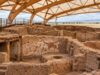
A Zeugma Mosaic Museum visit rewards a little patience. It is tempting to head straight for the famous face often called the “Gypsy Girl”, take a photograph and leave. Give the larger floor mosaics time first and the fragment becomes part of a much richer visit: houses, rooms, images and the work involved in recovering and displaying them.
This guide is for the museum in Gaziantep, rather than the separate archaeological site at Belkıs near Nizip. Confirm that distinction before booking a vehicle or tour. For a first visit, allow about two hours as an editorial estimate, with more time if you enjoy reading labels and comparing details. An hour can work when you choose a few priorities deliberately.
What to see first at Zeugma Mosaic Museum
- Begin with a large floor composition. Read its label and look for the arrangement of the whole surface before studying individual figures.
- Compare a second mosaic. Notice how borders and subjects give it a different character.
- Make time for the famous fragment. Use its label to understand what survives and how the museum identifies it.
- Add other material if time remains. The collection includes sculpture, wall painting and architectural pieces as well as mosaics.
Ask at arrival which galleries are open and where the current visitor circuit leads. Use the entrance plan to locate your priorities. The suggested order here is a way to divide your attention, not a claim that every gallery has a fixed one-way route. An audio guide is listed on the official museum page; ask about the languages available and the time needed before deciding to use it.
Read a mosaic from the outside inward
Stand back first. Where does the border end, and where does the main scene begin? Does the composition divide into panels, repeat a motif or direct the eye to one centre? Looking at the pattern before the subject helps when a story is unfamiliar. It also shows the decisions a maker had to fit into the available surface.
Then move closer within the visitor space. The individual small pieces are called tesserae. Look at how their direction follows a curve or defines an edge. Compare light and shadow on a face or garment, then look at a border again. The technical work can be just as absorbing as identifying a mythological figure. Keep your distance from the display and follow the museum’s rules about barriers and photography.
Finally read the label. It can separate what was discovered, what has been restored and what a subject is thought to represent. A missing section can be as informative as a complete scene if you understand its context. If there are site photographs or excavation displays beside the object, use them to reconnect the museum presentation with the room or building where the mosaic was found.
The “Gypsy Girl” and the limits of a nickname
The widely recognised fragment deserves close attention for the eyes, the turn of the head and the surviving details. Its popular name does not establish the identity or ethnicity of the person represented. The official museum description discusses a possible association with a follower of Dionysus. Keep that interpretation separate from the familiar nickname.
Look at the fragment after a larger floor if you can. The change in scale makes the survival of a partial image more striking. Let other visitors approach in turn, especially if the display space is busy. A brief view without a phone in front of your face can reveal more than several hurried photographs. Check the current photography rules and keep flash off wherever required.
One hour, two hours or a longer museum morning?
| Available time | Suggested focus | What to leave flexible |
|---|---|---|
| About one hour | One large composition, one comparison and the famous fragment | Extra galleries and extensive label reading |
| About two hours | A broader circuit with room context and other object types | A second look at your favourite work |
| A slow morning | Audio guide if suitable, detailed comparisons and breaks | Lunch time and the next city stop |
These are planning suggestions. A queue, a temporary closure or your own interest can change the balance. If time is short, tell yourself which two things you want to understand before leaving. For example, choose how a floor was organised and how tiny pieces create shading. That gives even a short visit a purpose beyond finding the best-known image.
Getting there and fitting it into Gaziantep
The museum’s official address is on Hacı Sani Konukoğlu Boulevard in the Mithatpaşa area. Show a driver the full museum name, Zeugma Mozaik Müzesi, and save the entrance pin. Plan the old-city food and market walk as another part of the day. Check the real walking route before deciding to go between them on foot, particularly in heat, rain or with limited mobility.
For a first city visit, put the museum in the morning and keep lunch flexible. You will have more freedom to stay with an absorbing gallery, and less risk of arriving close to last admission. If you are deciding which southeastern city deserves the extra night, use our Gaziantep or Şanlıurfa comparison. The museum-specific decision comes after choosing your base.
Opening hours and admission checks
On 11 November 2026, the Ministry’s museum page listed opening at 08:30, closing at 17:00 and the ticket office closing at 16:30, with daily opening. Recheck those arrangements for your date. Summer or special evening programmes need their own confirmation. Arriving at the ticket deadline leaves little time for the galleries, so plan the visit around the closing time as well as admission.
Ask about the applicable ticket and any pass you intend to use. Do not assume that a domestic museum-card note establishes eligibility for a foreign visitor. Confirm step-free access and lift operation directly if these determine whether your group can use the route. For another archaeology day centred on how to read domestic spaces, see our Çatalhöyük day trip from Konya.
Cover: AI-generated conceptual image of geometric tesserae. It is not a photograph of a museum object.
Official sources and final checks
Before travelling, confirm current opening, admission, accessible areas and local transport. Adapt the wider city walk to the season and the day’s conditions.